Uterine Angiolipoleiomyoma in a Premenopausal Woman: Clinical Development, Pathohistologic Findings, and Treatment - Case Report
 10.52845/CMRO/2024/7-12-5
Abstract
Introduction
Angiolipoleiomyomas (ALLMs) are benign overgrowths of smooth muscle, adipose tissue and blood vessels. These neoplasm belong to a particular group of tumors known as mesenchymal tumors whose growth can occur in any anatomical site. ALLMs usually occur in the kidneys, but are rare in other organs such as the uterus.
Case report
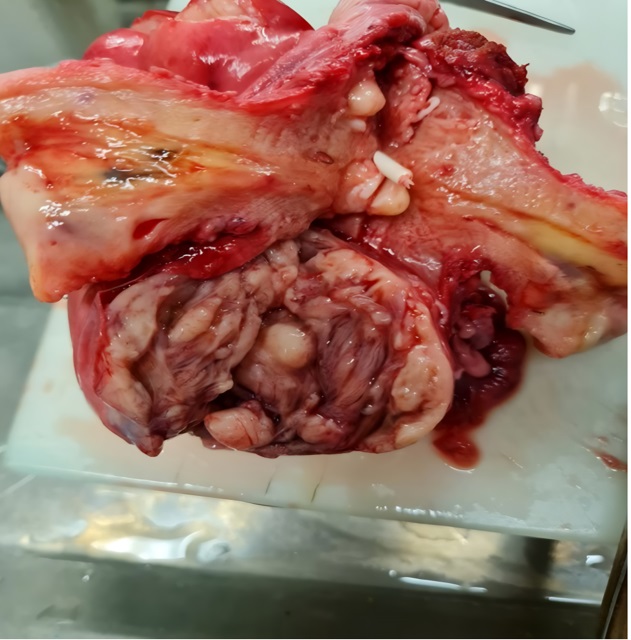
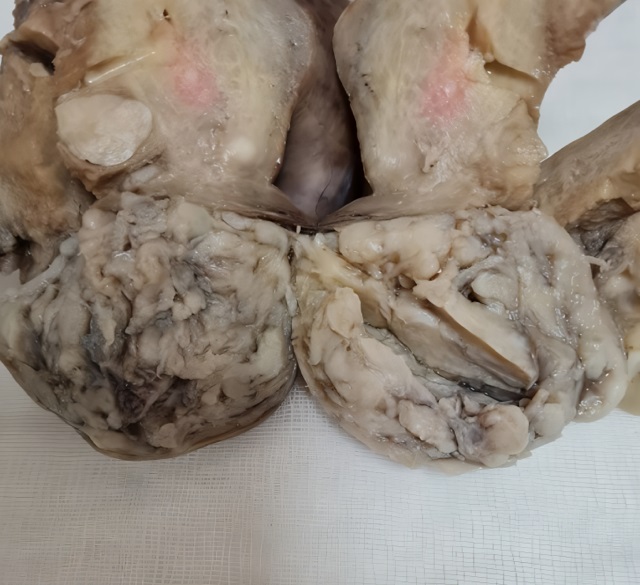
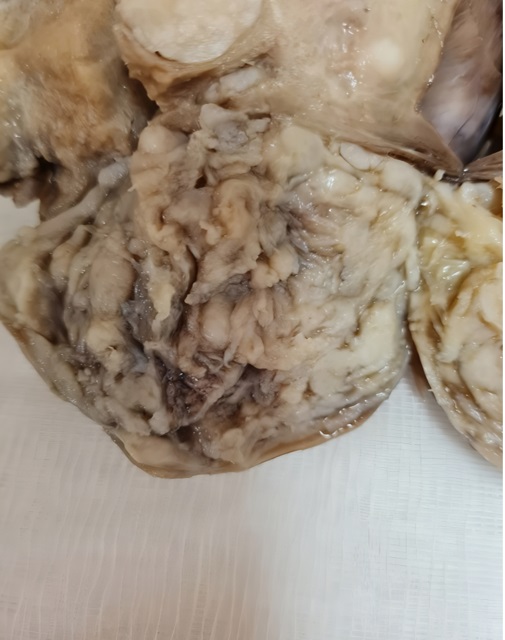
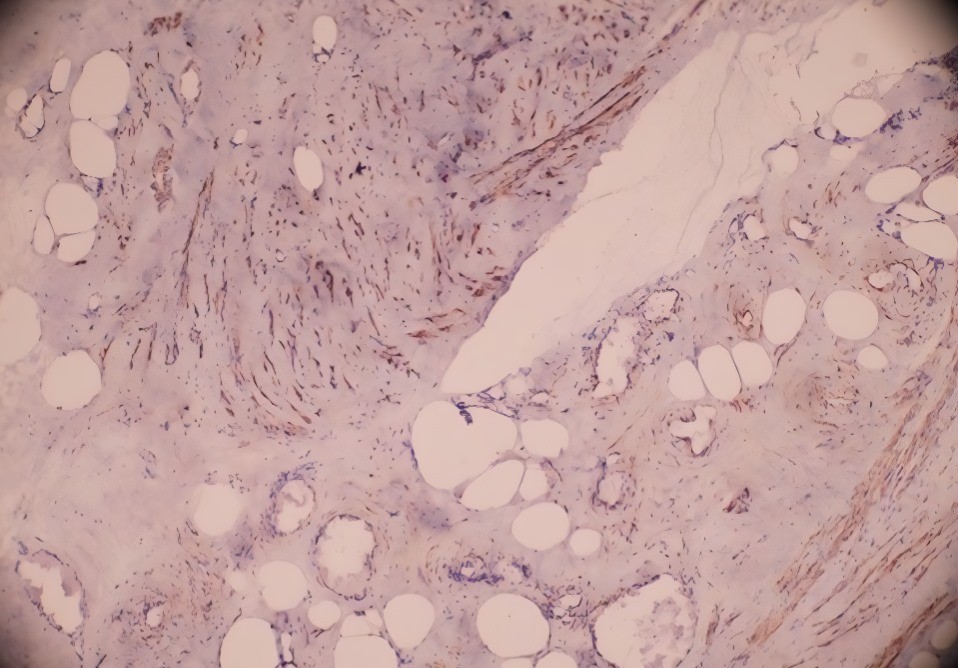
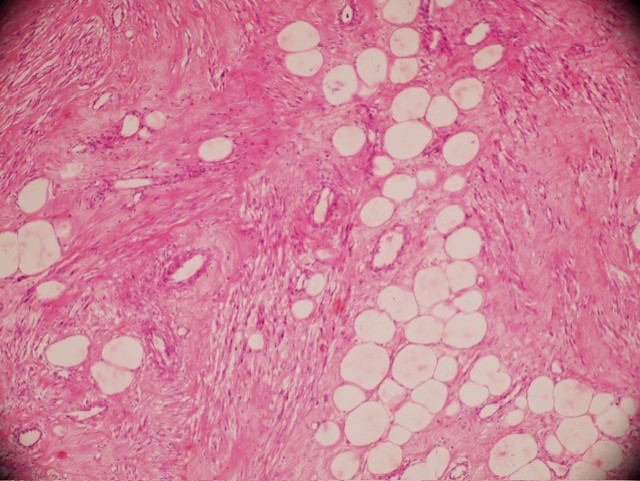
A 45-year-old woman with 3 previous deliveries presented with abnormal uterine bleeding. She was being followed for hypertension. Initial ultrasonography revealed two fibroids in the uterus. She was implanted with a levonorgestrel-containing intrauterine device (RIA). She missed follow-up appointments due to the pandemic and her complaints increased. At her second presentation, ultrasonography showed an intramural fibroid measuring 50x20 mm and several subserosal fibroids. Total abdominal hysterectomy and bilateral salpingo-oophorectomy were planned. The postoperative pathology specimen contained a 7 cm diameter angiolipoleiomyoma and an additional 4 leiomyomas.
Conclusion
Uterine ALLM is a rare benign tumor. Definitive diagnosis is made by histopathologic examination. Surgical intervention takes care of the issue at a higher efficiency level, but patients should be followed up for a long-term.
Keywords: Angiolipoleiomyoma, uterine tumor, fibroid, hysterectomy.

Keywords
- Angiolipoleiomyoma
- Uterine Tumor
- Fibroid
- Hysterectomy
How to Cite
Vefa ŞAKAR, Gülnur Güven, Özhan Özdemir . (2024). Uterine Angiolipoleiomyoma in a Premenopausal Woman: Clinical Development, Pathohistologic Findings, and Treatment - Case Report. Journal of Current Medical Research and Opinion , Vol. 7 No. 12 (2024) , 3817-3823 . https://doi.org/10.52845/CMRO/2024/7-12-5